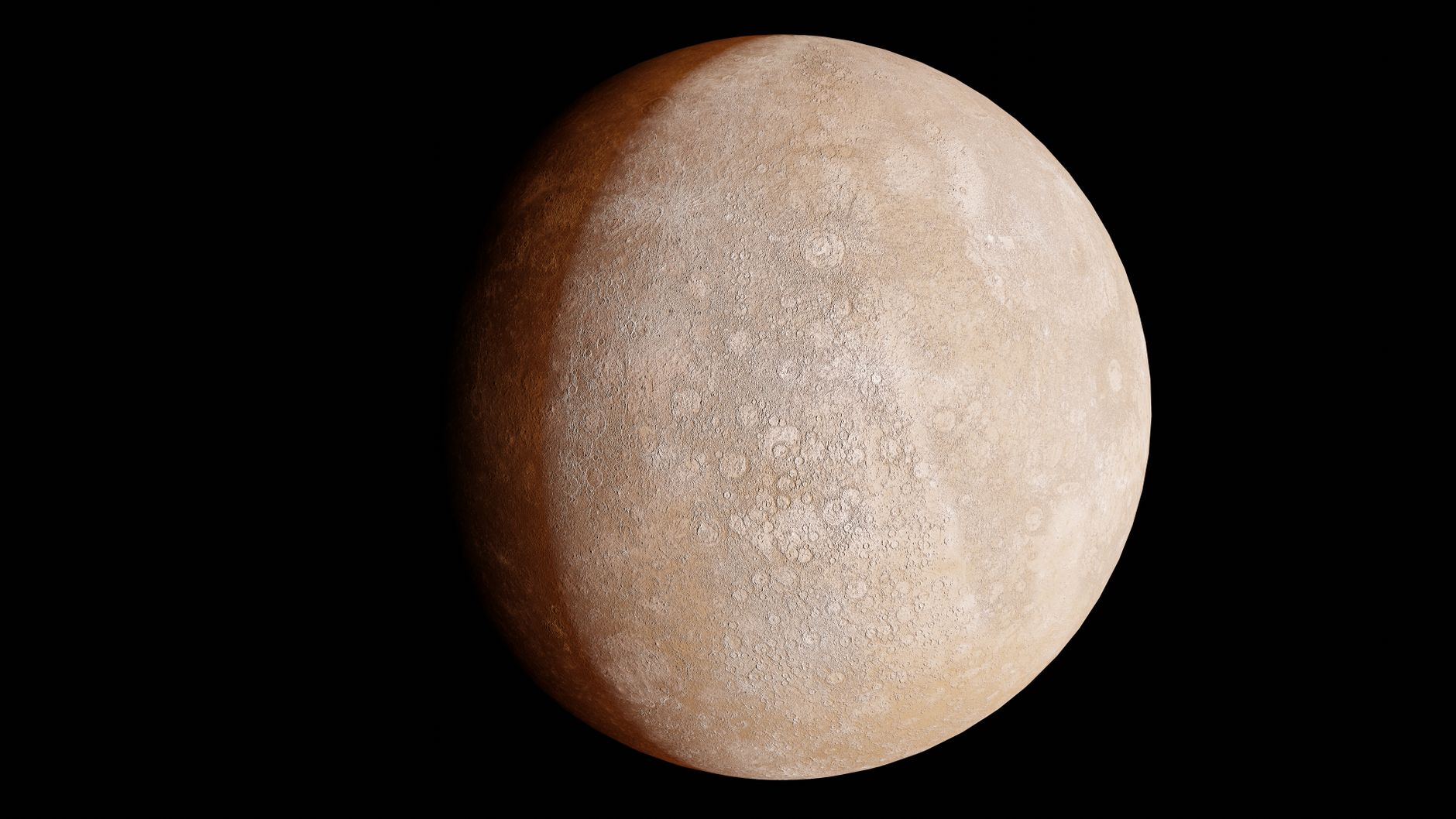
The Mercury spacecraft mission has successfully reached its destination, entering orbit around the planet. This groundbreaking achievement is only the second of its kind and promises to unlock new scientific discoveries.
Overview of the Mercury spacecraft mission
The recent Mercury spacecraft mission marks a significant milestone in space exploration, as it successfully entered the orbit of Mercury, becoming only the second mission to achieve this feat. This groundbreaking accomplishment follows the original Mariner 10 mission, which flew by Mercury in the 1970s, providing limited data about the planet.
The spacecraft, named BepiColombo, is a collaboration between the European Space Agency (ESA) and the Japan Aerospace Exploration Agency (JAXA). Launched in 2018, its journey to Mercury has taken over six years, during which it has utilized gravity assists from Earth and Venus to navigate through the solar system. The mission’s primary objectives are to gather detailed information about Mercury’s surface, its magnetic field, and its exosphere, which could provide insights into the formation and evolution of terrestrial planets.
Key features of the mission include:
- Advanced Instruments: BepiColombo carries a suite of scientific instruments designed to analyze the planet’s geological composition.
- Two Spacecraft: The mission consists of two separate spacecraft that will operate in tandem to maximize data collection.
- Innovative Technology: The use of cutting-edge technology allows for efficient data transmission back to Earth.
As scientists eagerly await the data from this mission, many are left wondering if the Mercury spacecraft mission represents the pinnacle of modern space achievement.
What does this mission mean for science?
The Mercury spacecraft mission represents a significant advancement in our understanding of the solar system’s innermost planet. As scientists analyze the data collected, several key implications for science emerge.
First, this mission enhances our knowledge of Mercury’s geology. Researchers hope to uncover details about its surface composition and geological history. The spacecraft’s instruments are designed to measure elemental and mineralogical data, which could reveal how Mercury formed and evolved over billions of years.
Second, this mission offers insights into planetary magnetism. Mercury has a unique magnetic field, and studying it could provide clues about the planet’s internal structure and dynamics. This understanding may also inform theories regarding the magnetic properties of other terrestrial planets.
Additionally, the Mercury spacecraft mission may have broader implications for comparative planetology. By examining Mercury alongside other rocky planets like Earth and Mars, scientists can identify similarities and differences in their formation and evolution. This comparative analysis is crucial for understanding the conditions that lead to life.
Finally, the mission fosters international collaboration in space exploration. Scientists from various countries are working together to analyze the data, demonstrating the global interest in planetary science.
Overall, the Mercury spacecraft mission is not just an exploration of a distant world; it is a pivotal step forward in answering fundamental questions about our solar system and beyond.
Mercury’s unique characteristics and challenges
The Mercury spacecraft mission is not just a remarkable journey; it also faces unique challenges due to the planet’s extreme environment. Mercury, the closest planet to the Sun, experiences temperatures that can soar to over 800 degrees Fahrenheit during the day and plummet to minus 330 degrees Fahrenheit at night. This drastic temperature fluctuation poses significant engineering challenges for spacecraft.
Additionally, the spacecraft must navigate a complicated gravitational landscape. The strong gravitational pull from the Sun complicates orbital maneuvers, requiring precise calculations and advanced technology. The mission design includes several flybys of Venus and Earth to utilize gravitational assists, allowing the spacecraft to slow down enough to enter Mercury’s orbit.
Moreover, Mercury’s surface is riddled with craters and is composed mainly of heavy metals, creating a harsh environment for scientific instruments. The mission team has equipped the spacecraft with specialized instruments designed to withstand high temperatures and other hostile conditions. These instruments aim to gather data about Mercury’s geological history, magnetic field, and potential volcanic activity.
In summary, the Mercury spacecraft mission does not only aim to expand our understanding of the planet’s characteristics but also showcases the resilience and ingenuity of modern space exploration. The challenges presented by Mercury are a testament to the complexity and significance of this ambitious mission.
Future missions planned for Mercury
As the Mercury spacecraft mission continues to unveil the mysteries of the solar system’s innermost planet, future missions are already being planned to build on its discoveries. Various space agencies are exploring the possibility of additional exploratory missions to further understand Mercury’s geology, magnetosphere, and potential for resources.
One of the key goals for future missions is to gather more detailed data about Mercury’s surface and internal structure. Current plans include:
- Orbital Studies: Future missions may deploy advanced orbiters equipped with high-resolution imaging systems and spectrometers to analyze the planet’s surface composition in greater detail.
- Lander Proposals: There are discussions about sending a lander to Mercury’s surface to conduct in-situ measurements. This would provide direct insights into its geological history and potential resources.
- Collaborative Missions: International collaborations could enhance the scientific return of future missions, pooling resources and expertise from various space agencies.
Moreover, scientists are also looking at ways to leverage the data collected from the current Mercury spacecraft mission to inform the design and objectives of these future endeavors. The continuous exploration of Mercury not only promises to expand our understanding of the planet but also of planetary formation and evolution in the broader context of our solar system.
Public interest in space exploration
The recent success of the Mercury spacecraft mission has reignited public interest in space exploration, drawing attention to the wonders of our solar system. As humanity continues to push the boundaries of knowledge, missions like this one captivate the imagination of people around the globe.
Many individuals are fascinated by the idea of exploring distant planets and understanding their environments. The Mercury spacecraft mission stands out not only for its technical achievements but also for its potential to uncover the mysteries of one of the solar system’s least understood planets.
Interest in space exploration has been fueled by several factors:
- Media Coverage: Extensive coverage of the spacecraft’s journey and findings has kept the public engaged.
- Educational Programs: Schools and universities are increasingly incorporating space science into their curricula, inspiring a new generation of scientists and engineers.
- Social Media: Platforms like Twitter and Instagram allow enthusiasts to share their excitement, making space exploration a trending topic.
- Public Events: Lectures, exhibitions, and live broadcasts of mission events create opportunities for the public to connect with space science.
As the Mercury spacecraft mission continues to unfold, it remains a beacon of inspiration, reminding us of the endless possibilities that lie beyond our planet.
Photo by Zelch Csaba on Pexels
2 thoughts on “Mercury spacecraft mission: Is it the best space achievement?”