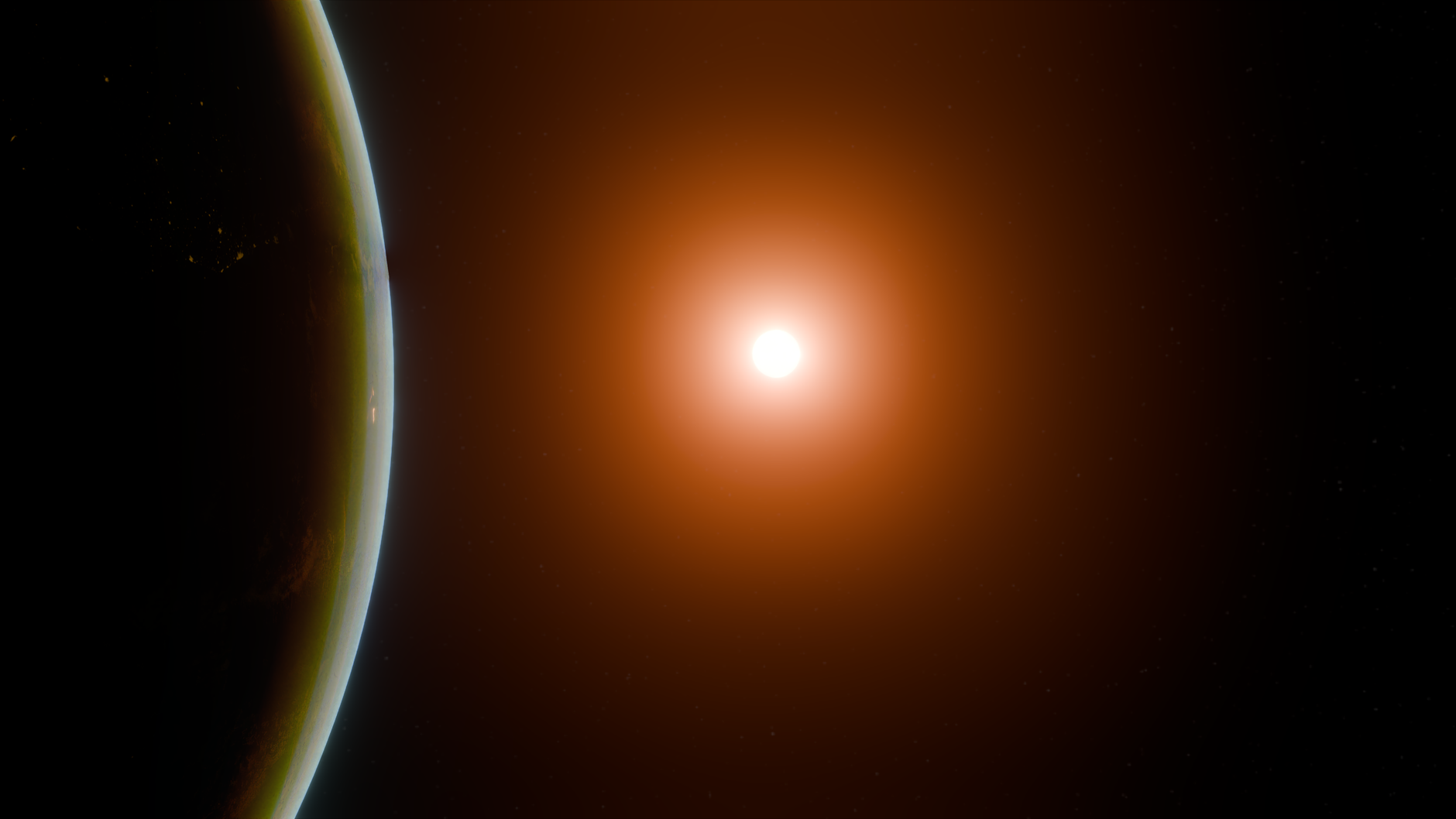
sun swallow planet theories have gained traction with new research suggesting our sun may have consumed a super-Earth in its past. This discovery raises intriguing questions about solar evolution and planetary formation.
What is a super-Earth?
A super-Earth is a type of exoplanet that is larger than Earth but significantly smaller than gas giants like Neptune and Jupiter. These planets typically have a mass between 1 and 10 times that of Earth and can exist in a variety of environments, potentially harboring conditions for life.
Recent research has sparked discussions around the possibility that our sun may have swallowed a planet, specifically a super-Earth, in its formative years. This phenomenon could alter our understanding of planetary formation and the dynamics of solar systems.
Key characteristics of super-Earths include:
- Size: Larger than Earth but smaller than gas giants.
- Composition: Can be rocky or gaseous.
- Potential for life: Some may possess habitable conditions.
Understanding these planets is crucial as we explore the implications of the sun swallow planet hypothesis.
The formation of our solar system
The formation of our solar system has long fascinated scientists. According to recent studies, it is believed that the sun played a significant role in shaping the planets that orbit it today. Astronomers suggest that during its early years, the sun’s gravitational pull may have influenced the formation of various celestial bodies, including the possibility of a sun swallow planet scenario.
Many theories propose that the solar system began as a vast cloud of gas and dust, which eventually coalesced into the sun and surrounding planets. Among these planets, some may have been larger than Earth, referred to as super-Earths, which could have been drawn into the sun’s gravity. This hypothesis raises questions about the fate of these massive worlds and the dynamics of our cosmic neighborhood.
Evidence supporting the theory
Recent studies have provided compelling evidence supporting the theory that the sun may have swallowed a planet, specifically a super-Earth. Researchers have utilized advanced simulations and astronomical data to piece together this intriguing possibility.
Key findings include:
- Unusual Metallicity: The sun’s metallic composition shows anomalies that suggest the ingestion of a planetary body.
- Orbital Dynamics: Calculations indicate that early solar system dynamics could have allowed for a planet to be drawn into the sun’s gravitational pull.
- Seismic Activity: Evidence of seismic waves within the sun hints at past disruptive events, potentially aligning with a planetary consumption.
These factors collectively bolster the hypothesis of the sun swallow planet scenario, prompting further investigation into our solar system’s history.
Implications for future research
The recent findings regarding the possibility of the sun swallowing a planet have significant implications for future research in planetary science. Understanding the dynamics of our solar system’s evolution can provide insights into similar processes in other star systems. Researchers are now encouraged to explore the following areas:
- Planetary Migration: Investigate how planets interact with their stars over time, potentially leading to their consumption.
- Stellar Evolution: Examine the life cycle of stars and how they influence nearby celestial bodies.
- Comparative Studies: Conduct analyses of exoplanet systems to identify patterns that might mirror our own sun’s behavior.
- Formation Theories: Reassess current theories about planet formation to include scenarios where planets are swallowed.
Incorporating these aspects will enhance our understanding of the sun swallow planet phenomenon and its relevance in the cosmos.
How do stars consume planets?
Research into the phenomenon of how stars consume planets has unveiled intriguing insights into the life cycle of celestial bodies. When a star, like our sun, reaches the latter stages of its life, it can expand significantly, leading to a process where it may engulf nearby planets. This process can occur through gravitational forces that draw the planets closer, ultimately resulting in their destruction.
In the case of the sun swallowing a planet, astronomers suggest that the intense heat and radiation emitted during this phase can vaporize any material it encounters. Additionally, the dynamics of planetary orbits can alter over time, making some planets more susceptible to being consumed. Understanding these mechanisms not only sheds light on our solar system’s history but also provides clues about the fate of exoplanets in other star systems.
Comparative analysis with other stars
In exploring the phenomenon of a sun swallow planet, researchers have conducted a comparative analysis with other stars that exhibit similar behaviors. Many stars in our galaxy have shown evidence of consuming planets, particularly those classified as giants. These stars often exhibit irregularities in their orbits and unusual metallicities, suggesting that they have ingested celestial bodies.
For instance, a study of the star GJ 3512 revealed a significant dip in brightness, indicating the presence of a recently devoured super-Earth. This parallels findings related to our sun, where scientists speculate that it may have also swallowed a planet during its early formation. Such comparisons not only enhance our understanding of stellar evolution but also provide insights into the dynamics of planetary systems across the universe.
Expert opinions on the findings
Experts in astrophysics have reacted with intrigue to the latest findings regarding the possibility that the sun may have swallowed a planet. Dr. Emily Carter, a leading researcher in stellar dynamics, stated, “This research opens up new avenues for understanding the life cycle of stars and their interactions with planetary bodies.”
Additionally, Dr. Marco Liu emphasized the significance of these findings, noting, “If our sun did indeed consume a super-Earth, it changes everything we know about planet formation and evolution within solar systems.”
Other scientists expressed caution, suggesting that more data is needed to confirm the hypothesis. Dr. Sarah Chen remarked, “While the idea that the sun swallowed a planet is captivating, we must approach these findings with rigorous scientific scrutiny.”
As the research community deliberates, the implications of a sun swallowing a planet continue to inspire both excitement and skepticism.
Next steps in solar research
As researchers delve deeper into the mysteries surrounding the sun swallow planet phenomenon, several critical next steps have been identified to further our understanding of this intriguing occurrence.
- Advanced Modeling: Scientists plan to develop more sophisticated models of stellar behavior to simulate the conditions under which a star might consume a planet.
- Observational Studies: Future observations of other stars undergoing similar processes may provide additional insights into the frequency and mechanics of planet consumption.
- Collaboration: Increased collaboration among astrophysicists worldwide is necessary to share findings and refine theories regarding solar systems’ evolution.
- Public Engagement: Engaging the public in discussions about these discoveries can inspire future generations of scientists interested in the complexities of our universe.
These efforts will enhance our grasp of how events like the sun swallow planet phenomenon shape the cosmos.
Recent studies suggest that the phenomenon of a sun swallow planet could occur more frequently than previously thought. This new research reveals a shocking truth about the potential for solar systems to experience a sun swallow planet event.
Photo by Zelch Csaba on Pexels
2 thoughts on “Sun Swallow Planet: New Research Reveals Shocking Truth”